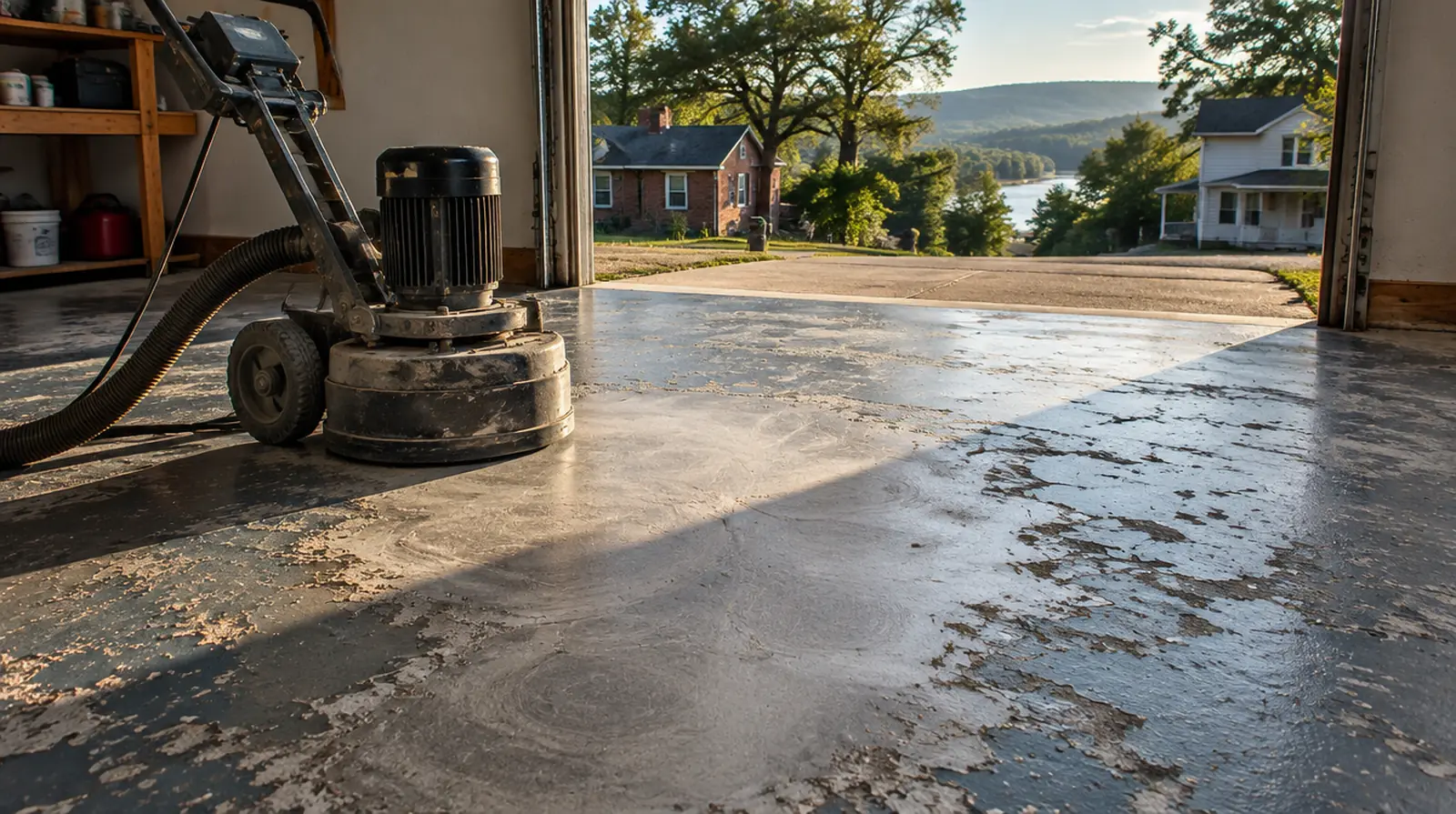
Finding the cause
- Bubbles or blisters often mean moisture coming up through the slab.
- Peeling under tires usually means the floor was never ground.
- Worn traffic lanes mean the top coat was too thin.
The repair
We grind away the failed coating, deal with moisture if needed, and put down a full system. Patching a failed floor rarely lasts.
Learn more about how we prep a garage.
Moisture is often the culprit near the river
On low ground, groundwater can move up through slabs that have no vapor barrier beneath them. That moisture pushes on coatings and breaks the bond. When we redo a floor like that, we use a primer designed to block vapor before the color coat, which is the step that most kit products skip.
Can you patch just one area?
Sometimes. If the floor is sound everywhere else and the failure has a clear cause, like a dropped tool or a spilled solvent, we can grind, patch and blend. If it is peeling in several places, the bond has likely failed across the floor and a full redo is the reliable fix.
Epoxy floor repair in Van Buren
River humidity, older slabs without vapor barriers and coatings rolled on without grinding are the usual reasons floors fail here. Epoxy floor repair in Van Buren begins with finding which one it is.
Wondering why your floor bubbled in summer?
Moisture rising through the slab is a common cause. We test and use a primer suited to damp concrete.
Wondering if a floor in a historic building can be repaired?
Yes. We patch carefully and respect original features where the owner wants them kept.
Wondering whether to patch or start over?
We test adhesion across the floor and price both options so you can decide.
How we repair
We cut back to sound coating, grind, fix cracks and rebuild the system, then blend it in.
Floors near the river bottoms
Homes and shops on lower ground closer to the river often have slabs that stay damp. Coatings on those slabs can lift if they were not installed with moisture in mind. When we repair them, we test moisture levels, remove all loose material and use a primer made for damp concrete before rebuilding. In some cases a breathable sealer or polish is a better long-term choice than a film coating, and we will say so. After repairs we leave care notes and suggest a mat or door seal to keep water out at the entry.
Tractor and mower damage
Dropped mower decks leave gouges we fill and recoat.
Patching gouges in a coated floor
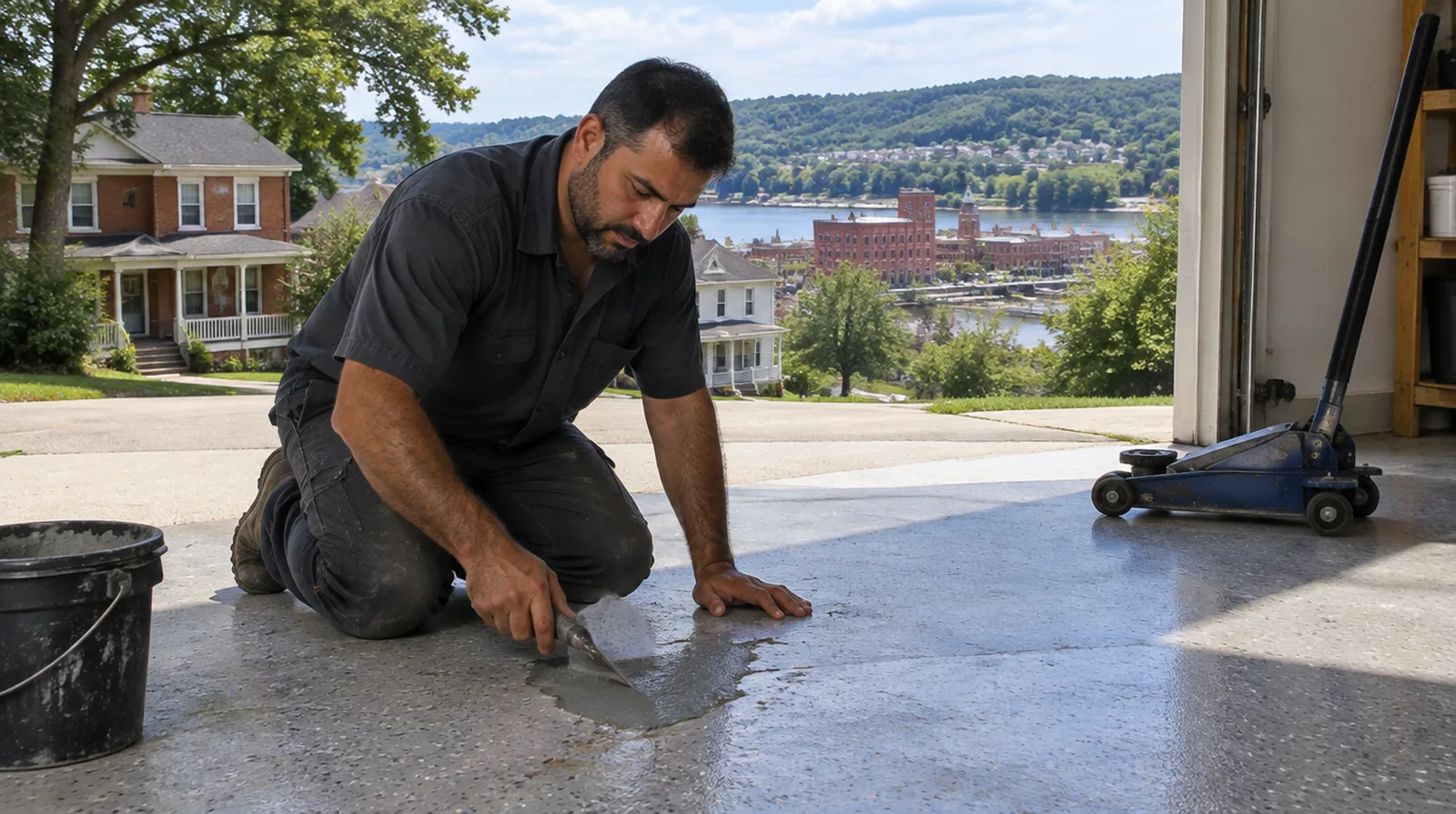
Floor jacks, dropped tools and dragged equipment can gouge a coated floor. In the photo, an installer is patching a gouge with a small trowel, with a floor jack parked to the side.
We clean the gouge, fill it with epoxy filler, sand it flush and recoat the area.
Gouge repair steps
- Clean the damaged area.
- Fill with epoxy filler.
- Sand flush.
- Recoat to match.
Gouge repair questions
Will it match?
Chip floors hide repairs best.
How long does it take?
Usually a few hours plus cure time.
Common causes of gouges in Van Buren garages
We see a lot of gouges from floor jacks, dropped tools, trailer hitches and lawn equipment. Older coatings that were applied thin also chip more easily. If you have several gouges or chips, we can repair them all in one visit. We match the color as closely as we can, and chip floors hide repairs best. If your floor has many chips and peeling areas, we may suggest a full recoat instead. We test the bond during the visit so you get an honest recommendation. To prevent future gouges, we suggest using a piece of plywood under jack stands and being careful when moving heavy equipment across the floor.
When a repair makes sense
A repair is a good fit when the rest of the coating is still stuck tight and only one or two spots are damaged. We tap around each gouge to listen for hollow areas, since a hollow sound means the coating has let go and the patch needs to be bigger.
Get a repair assessment
Call (479) 383-4562.