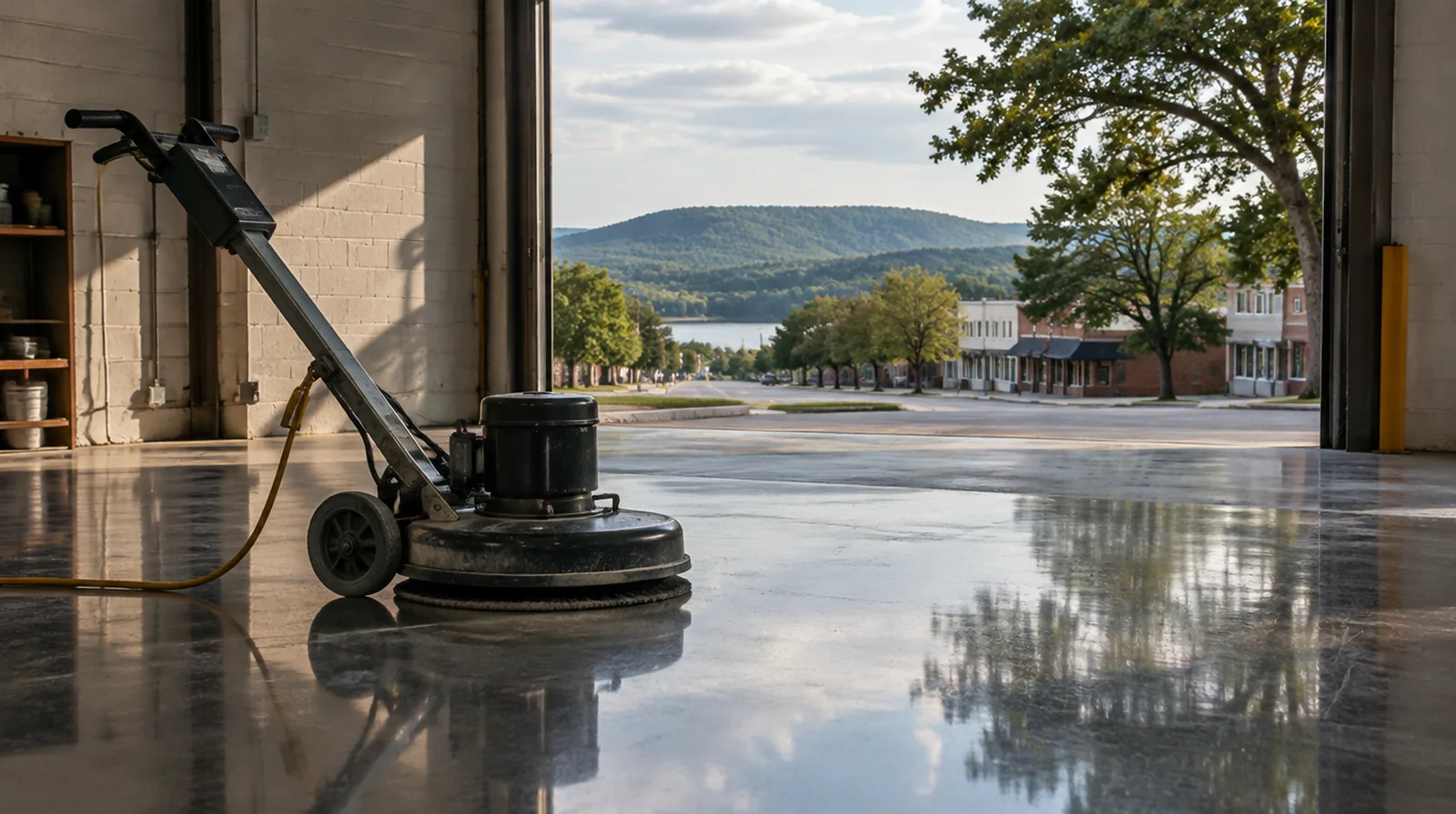
Best uses
Stores, offices and open living areas where people want an industrial look with little upkeep.
The process
Grind flat, apply a hardening densifier, then polish with finer and finer pads. Stains or dyes can add color.
Honest limits
Old buildings often have patches and glue marks that will show in a polish. In that case a coating may look better.
Upkeep is simple
Dust mopping and a neutral cleaner are usually enough. Every so often a light buffing brings back the shine. There is no coating to peel or recoat, which is why many businesses like it for long-term cost.
Adding color
Dyes or stains can be added during the polishing process to give the floor a warm brown, gray or black tone. The color soaks into the concrete instead of sitting on top, so it does not chip off.
Polished concrete in Van Buren
Warehouses near the interstate, shops and modern homes suit polished concrete. Polished concrete in Van Buren turns the slab into the floor, with no coating to peel.
Wondering if an old downtown slab can be polished?
Often, though patches and stains will show. Many owners like that history.
Wondering about polish in a humid building?
Polish handles moisture better than coatings because there is no film to lift.
Wondering how shiny it gets?
From matte to high gloss, your choice.
From rough slab to polished floor
We start with coarse diamonds to strip coatings and flatten high spots. Cracks and holes are filled. A densifier soaks in and hardens the concrete. Finer diamonds follow, each pass smoother and brighter. A guard product goes on last to help resist stains. Depending on how deep we grind, the floor can show a smooth cream surface, fine aggregate or larger stones.
Warehouses near the interstate
Distribution and trucking warehouses near the I-40 and I-49 junction run forklifts and pallet jacks all day. Polished concrete resists dusting under that traffic, cleans with an auto scrubber and never needs stripping or waxing. We phase big floors so shipping lanes and racks stay in use while work moves through the building.
Being honest about limits
Floors soaked with oil, covered in patches or exposed to strong chemicals may look and perform better under a coating. We will say so before you spend money. Polish also shows the slab's history, so if you want a perfectly uniform look, a coating may suit you better.
Dye options
Dyes can warm plain gray concrete during polishing. Satin sheens hide footprints well in busy shops.
Cleaning routine
A dust mop and neutral cleaner keep it bright.
Polished floors for antique stores
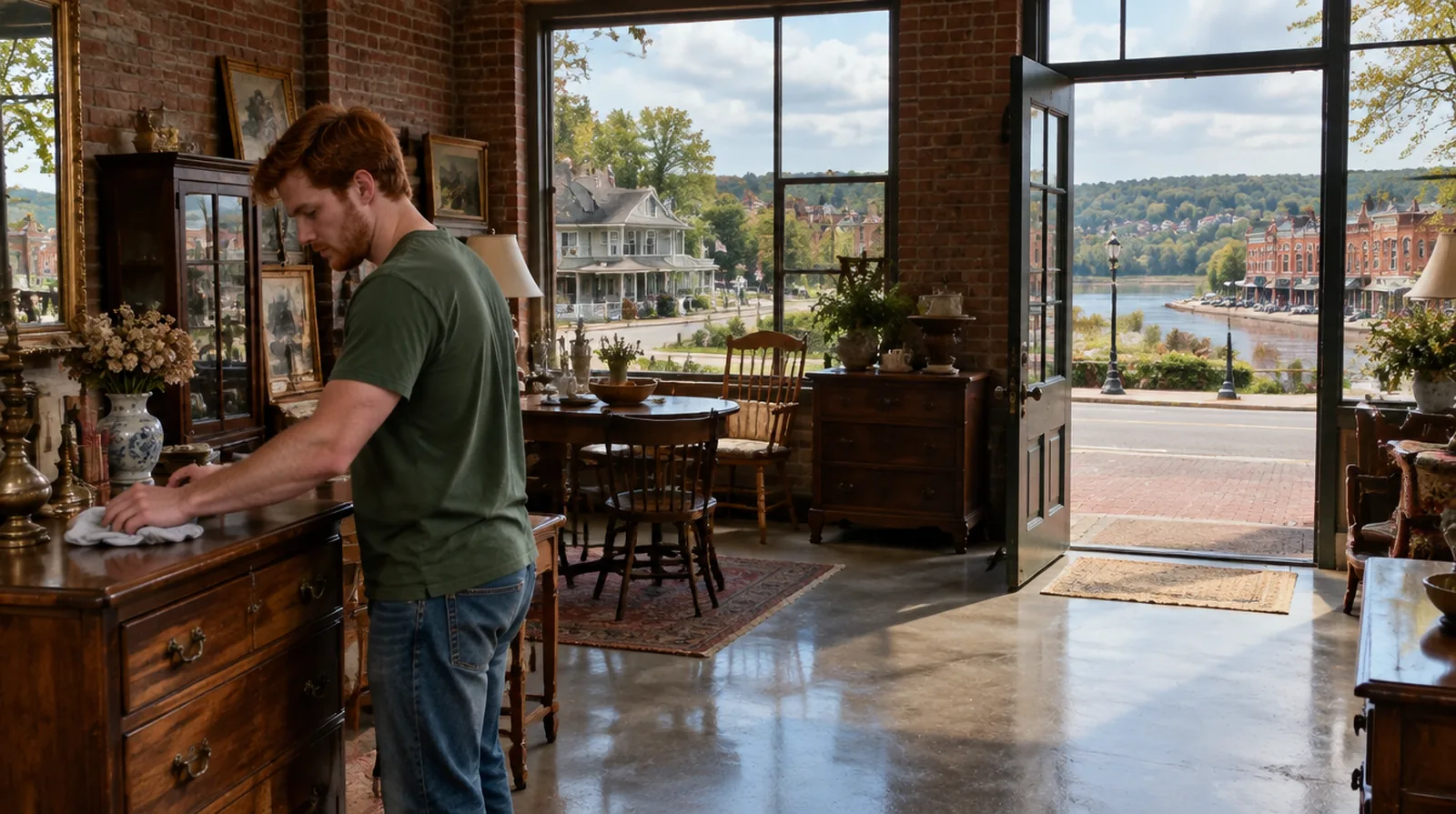
Antique stores in Van Buren often fill old brick buildings with heavy furniture, display cases and decor. A polished concrete floor holds up to dragging furniture and frequent rearranging, and it fits the look of the building. In the photo, a shopkeeper is dusting a dresser in an antique store with a polished concrete floor.
We work around inventory by moving items section by section.
Antique store polish steps
- Move inventory in sections.
- Grind, densify and polish.
- Add a guard for stains.
Antique store questions
Will dragging furniture scratch it?
Polished concrete resists scratches well.
Can it be done while open?
We can work in sections or after hours.
Why antique stores like polished concrete
Old brick buildings in Van Buren often have concrete slabs that were covered with carpet or tile for decades. Polishing brings that original floor back and gives it a warm, aged look that suits antique furniture and vintage decor. It holds up to heavy pieces being moved, and dust and dirt sweep up easily. For store owners, it means less time cleaning floors and more time with customers. We can leave old patches and marks visible for character or blend them in with dyes. Many owners like to see a sample area first, so we start in a back corner where it will not affect the shop.
If the store has a raised wood floor in one room and concrete in another, we polish the concrete side only and leave the wood just as it is.
Find out if your slab will polish
Call (479) 383-4562.