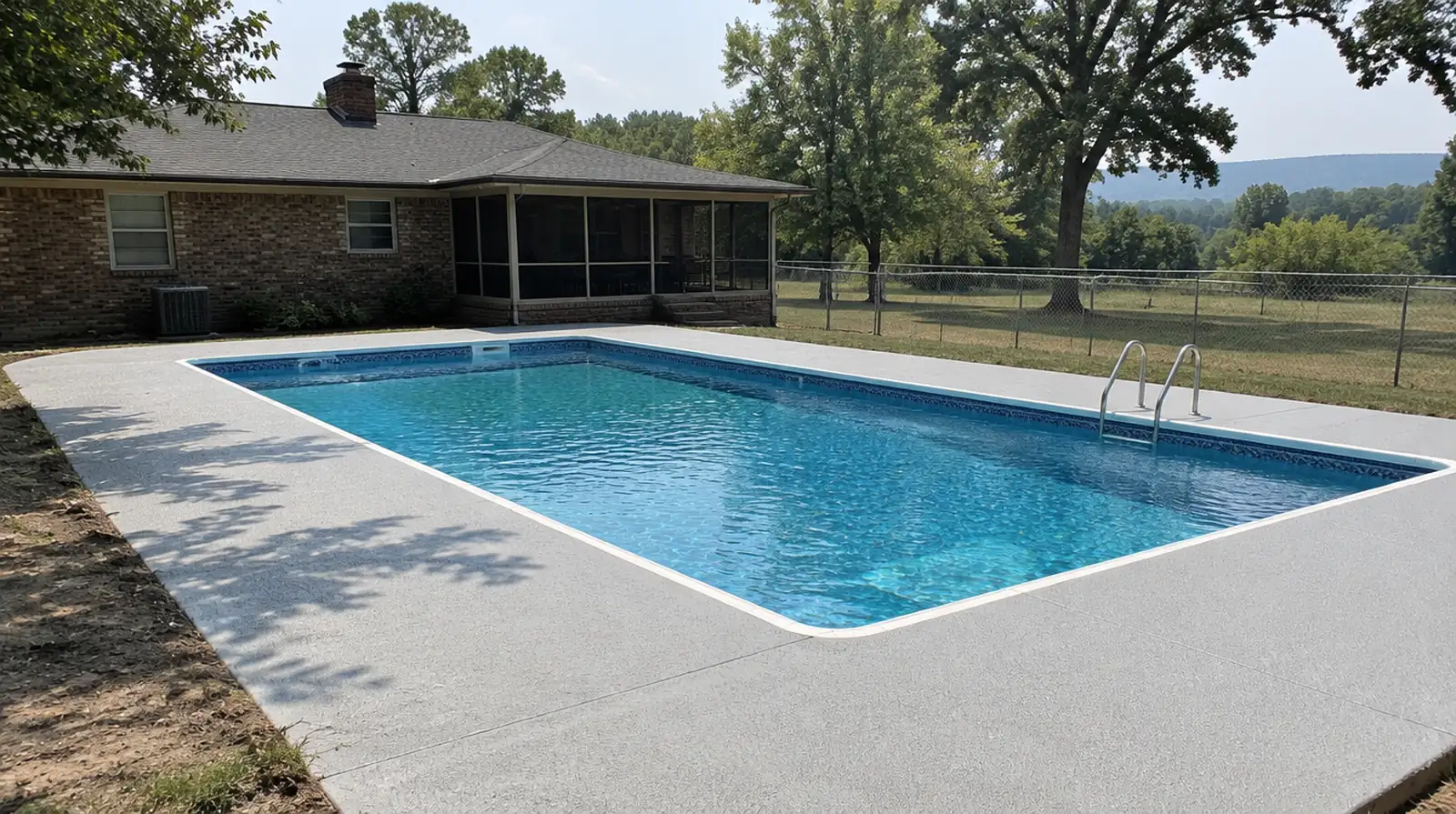
River Valley weather and outdoor concrete
Van Buren sits on the north bank of the Arkansas River, at the edge of the Ozark foothills. The valley holds heat and humidity through the summer, and it is not unusual for July and August to bring weeks of upper-90s afternoons. Spring storms can dump inches of rain in a day and bring hail. Winters are short but real, with ice storms and nights well below freezing every few years.
All of that is tough on a pool deck. Sun bakes old coatings until they chalk and crack. Heavy rain soaks into bare concrete and old seams, and when it freezes, it lifts the surface in flakes. Humid shade along fences grows mildew. A sealed, textured coating handles all of these better than bare concrete or an old coat of paint.
The kinds of decks we see
A lot of Van Buren's homes were built from the 1960s through the 1990s, and many backyard pools date from the same years. Some have vinyl liners with a narrow concrete deck around them. Others are gunite pools with wider decks and a diving board at one end. On older properties near downtown and the Main Street historic district, pools were often added later, and their decks were poured in sections over the years. Newer subdivisions toward the north end of town and out toward Alma have younger pools with broom-finish decks that just need protection and a cooler finish.
Soil around Van Buren ranges from river bottom silt near the Arkansas River to rocky clay on the hills. Decks near the river can settle, and decks on slopes often crack where runoff crosses them. We check grade and drainage before we quote.
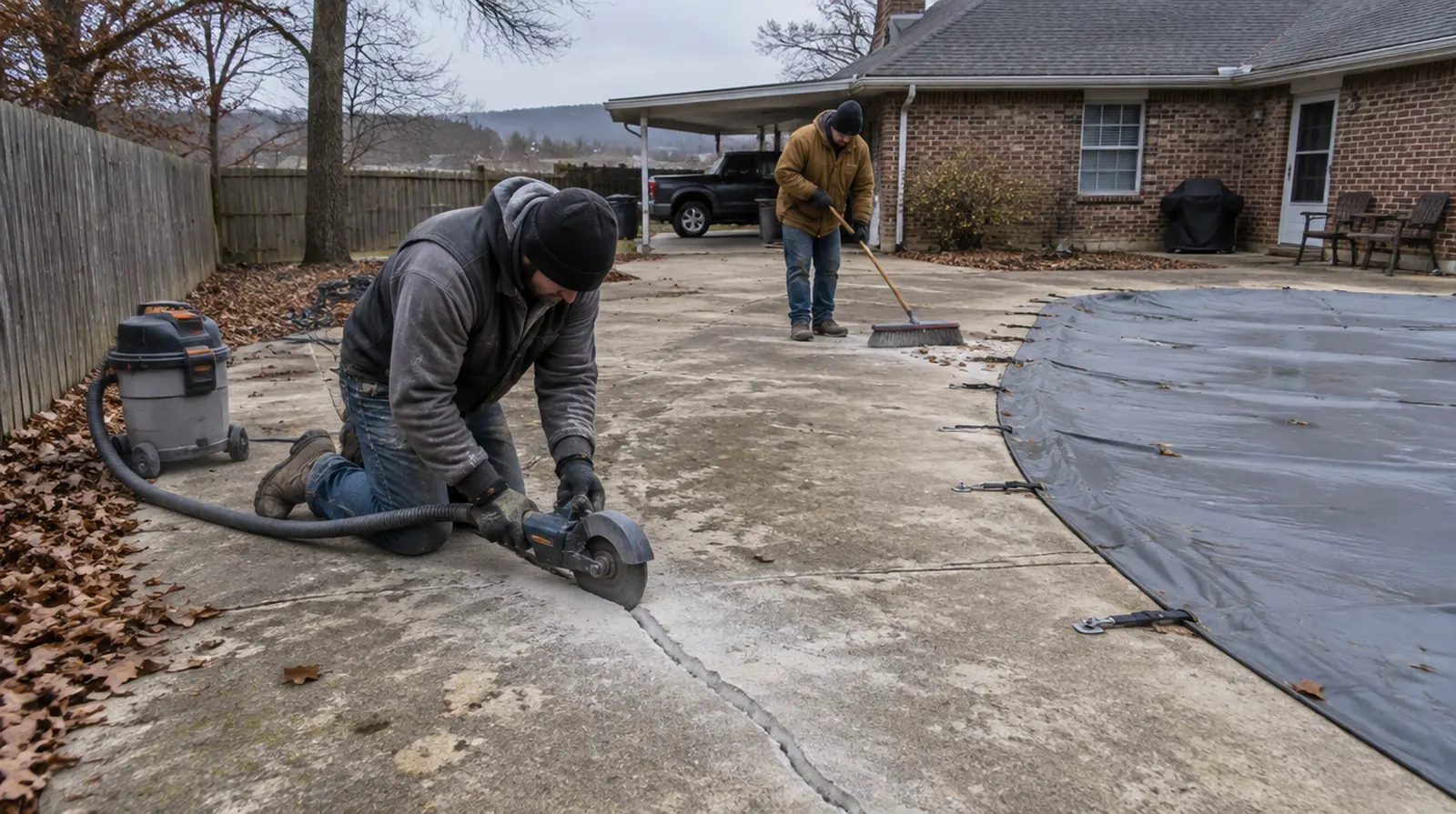
What the job looks like
Assessment. We walk the deck, test any coating that is on it and mark every crack and flaked area. If a slab has dropped or tipped, we will tell you whether coating is still a good idea.
Prep. We grind the surface to remove paint, sealers and dirt, and to give the coating something to grip. Mildew is cleaned and treated.
Repairs. Cracks are cut open and filled with a flexible material. Flaked and pitted areas are leveled with a polymer patch. Expansion joints get new sealant rather than a coat of texture.
Coating. A primer goes down first, then a textured finish, usually a spray knockdown or broadcast sand. We seal it with a UV-stable topcoat and add grit so the surface stays slip-resistant when wet. The pool stays full, with the tile line, liner edge and coping masked.
Choosing a color
Lighter colors stay cooler in the July sun and hide dust and pollen. Light gray, sand, buff and tan are all popular in Van Buren, and they look right next to the red and brown brick on so many homes in the area. If your deck gets a lot of leaves from pecans or oaks, a slightly deeper tan hides tannin stains between cleanings.
For areas that do not need texture, our concrete sealing protects plain patios and walks from water and freeze damage. Shops and garages get our tougher garage floor epoxy.
When to schedule
The best weather for coating is mid-spring and early fall. Concrete needs to be dry, and temperatures need to stay above about 50 degrees while the coating cures. In summer, we start early and wrap up before the worst heat. We avoid days right after heavy rain, since the slab needs time to dry. Most decks take three to four days.
Caring for the finish
Point downspouts away from the deck and keep sprinklers off it. Sweep or blow off leaves, especially in fall, and rinse the deck regularly. Clean stains with a mild cleaner and a soft brush. Do not use rock salt on the coating if it ices over. A new topcoat every few years keeps it sealed and grippy.
Common questions
Can you coat the deck around a vinyl liner pool? Yes. We mask the liner edge and coping carefully and keep all products off the liner.
Will the coating hide old patches? Yes. Once the patches are sound and level, the new texture covers them in one uniform finish.
Do you serve nearby towns? Yes, including Alma, Kibler, Dyer, Mulberry and Cedarville.
Let us bring your pool deck back
Call (479) 383-4562. We will look over the deck and give you a written price for coating it.